
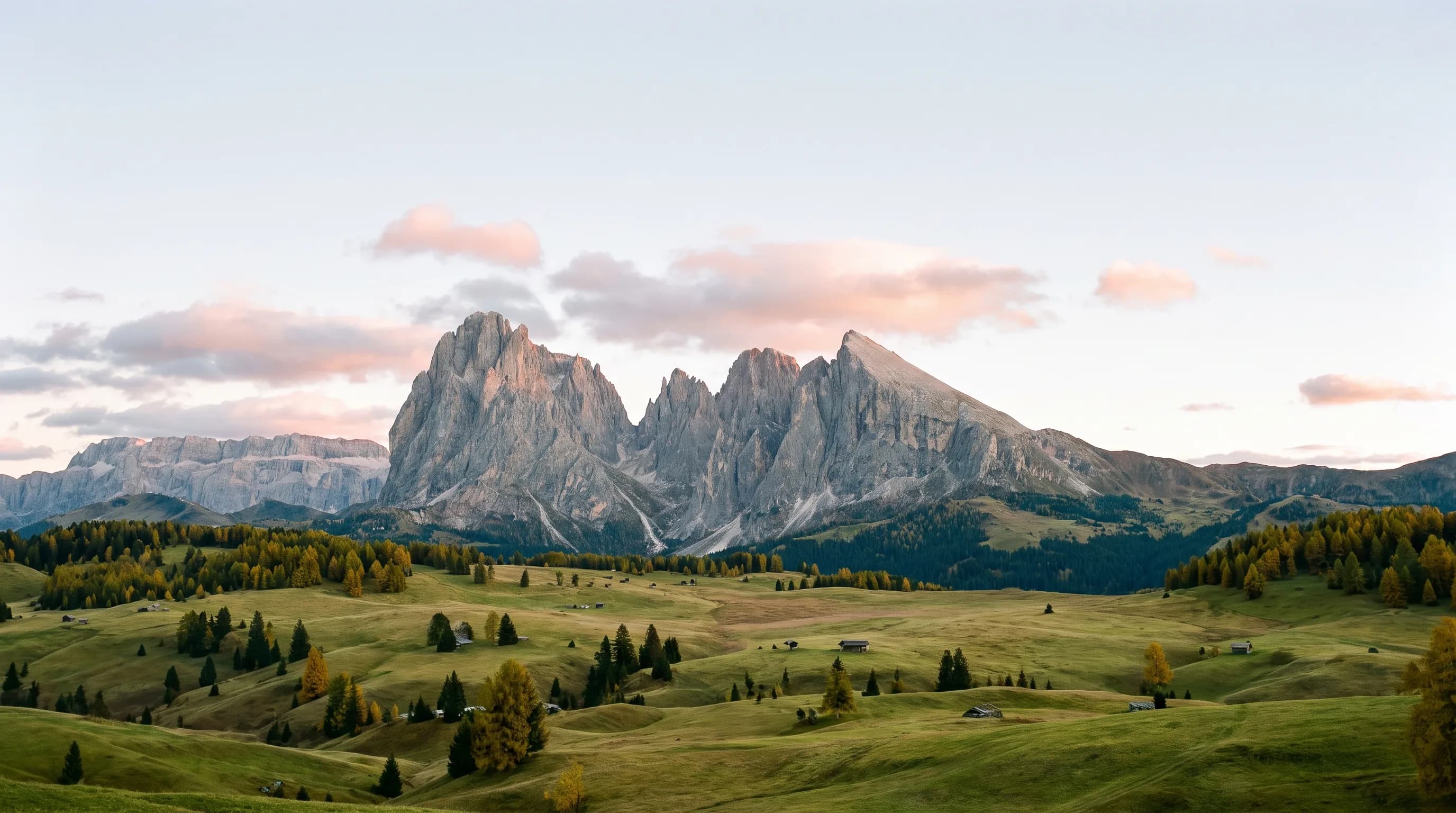
The Dolomites in high summer are spectacular. They are also full.
The parking lots fill early. The famous viewpoints have lines. The mountain huts buzz with the same energy as a city brunch place that has become too good at Instagram.
Shoulder season changes the whole mood.
The light does half the work
In late spring or early fall, the mountains look less like scenery and more like architecture. The ridges sharpen. The shadows move dramatically across the faces. Even a short walk can feel cinematic.
You do not need to conquer a route to understand the place. Some of the best moments are roadside pullouts, churchyards, and easy paths above towns where the peaks suddenly appear between farmhouses.
The towns matter as much as the trails
Ortisei, San Candido, Corvara, and smaller villages nearby are not just launchpads for hikes. They are part of the experience: carved balconies, bakeries, wood smoke, mountain grocery stores, and the easy blend of Italian and Alpine habits.
The food tells the story best. One meal may feel Austrian, the next unmistakably Italian, and both make sense.
Weather is the trade
Shoulder season asks you to be flexible. A planned ridge walk may become a low valley stroll. A sunny picnic may become soup by a window.
That is not failure. In the Dolomites, weather is part of the landscape. The trick is building a trip with room to change your mind.
Pack for layers, plan for pauses
The best shoulder-season Dolomites itinerary alternates movement and stillness. Hike when the sky opens. Take the cable car when it makes sense. Read in a cafe when the clouds sit low.
You came for the mountains. Let them set the pace.