
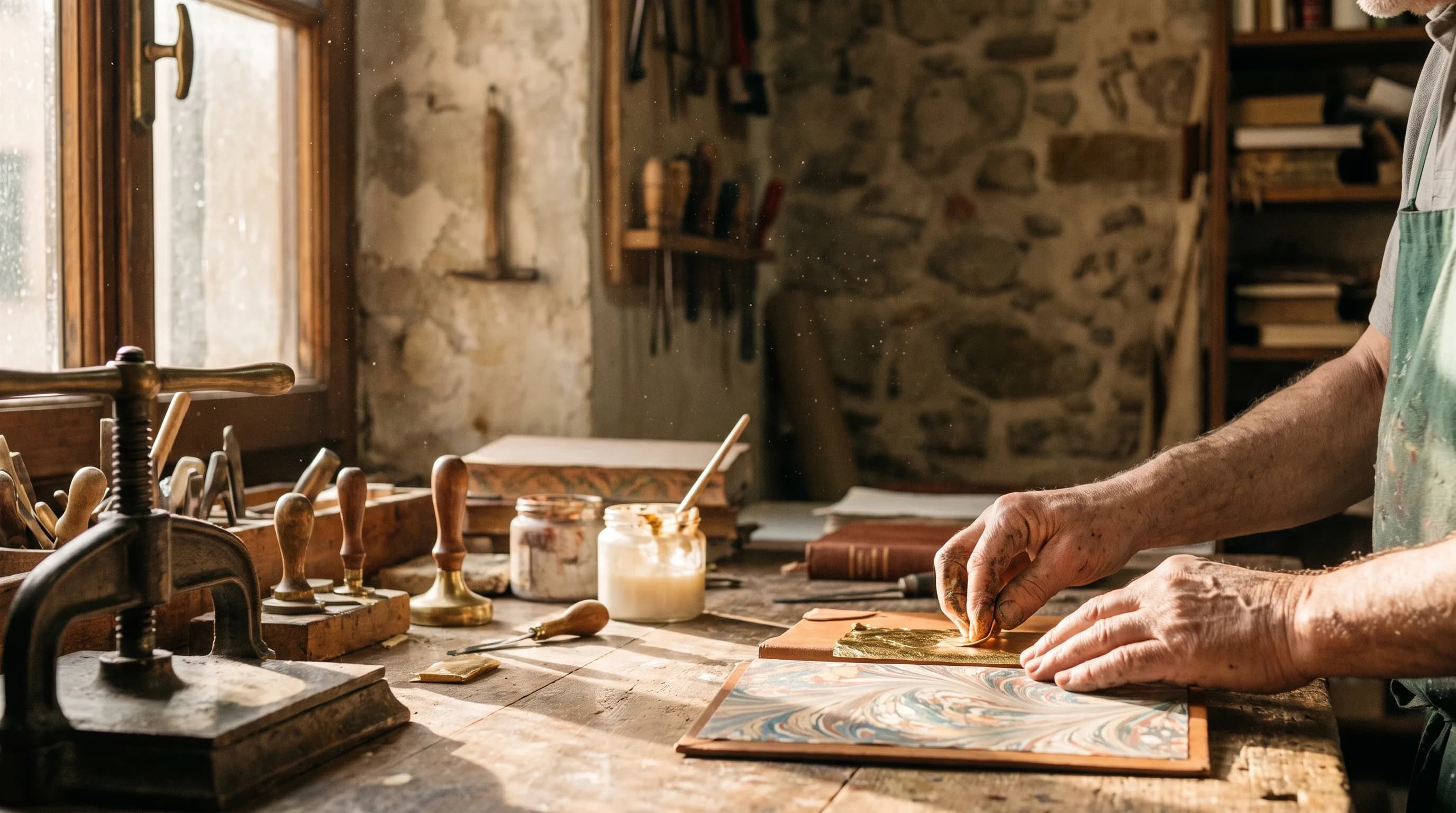
Florence is so full of masterpieces that it is easy to forget people still make things there.
Not just sell things. Make them.
Walk away from the densest tourist streets and the city starts to reveal another economy: workshops with paper drying on racks, tiny jewelry benches, frame samples stacked like books, tools that look inherited because they often are.
The Oltrarno still works with its hands
Cross the river and Florence becomes less museum and more neighborhood. The Oltrarno is not untouched, but it still has a living artisan pulse.
You may find bookbinders, restorers, ceramicists, leatherworkers, or woodworkers operating behind windows that look almost too modest for what is happening inside.
Watch before you buy
The best souvenir shopping in Florence starts with attention. Ask how something is made. Notice the difference between a hand-bound notebook and a stack of mass-produced lookalikes. Look for the small irregularities that signal a person, not a factory.
The point is not to spend more for romance. It is to understand what you are paying for.
Paper is the sleeper purchase
Marbled paper, stationery, and handmade notebooks travel well, cost less than many luxury souvenirs, and still carry the feel of Florence.
They also avoid the trap of buying something heavy, fragile, or impossible to explain once you get home.
The city becomes more human
Artisan Florence does not replace the museums. It balances them.
After a morning with Renaissance giants, there is something grounding about watching a living person cut, press, polish, stitch, or gild. It reminds you that culture is not only what a city preserves. It is what it keeps practicing.