
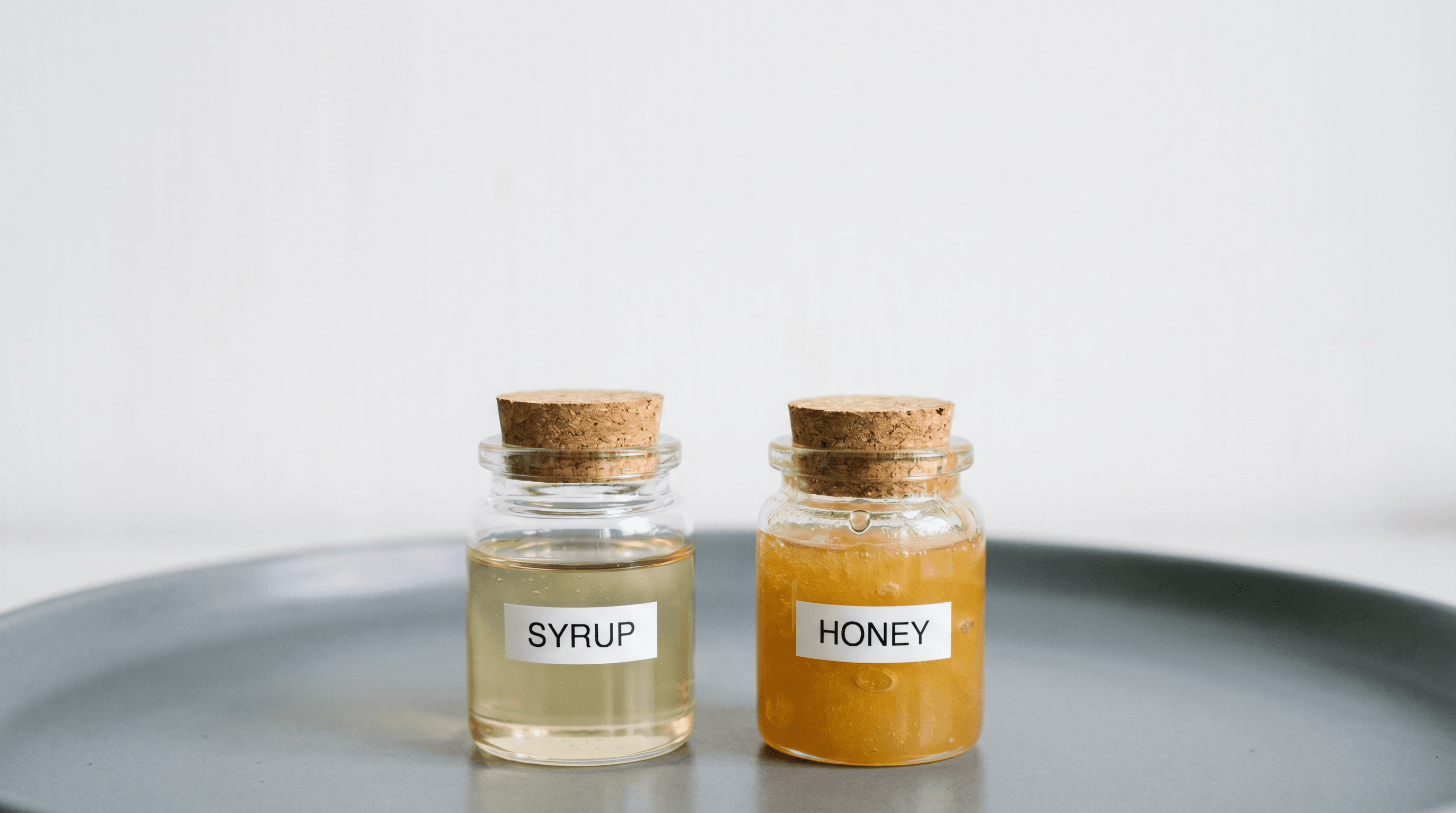
Walk down any grocery aisle in America and grab a bottle of honey. The bear, the squeeze jar, the store brand -- it all feels like the one thing in your cart you do not have to think about.
No ingredient list to decode. No additives. Just honey, the way bees have made it for forty million years.
That is the assumption. The reality is a federal criminal case.
In 2008, Homeland Security launched an undercover operation called "Honeygate." Agents went deep into the supply chain that feeds America's honey shelves. What they found became the largest food-fraud investigation in U.S. history.
Chinese honey -- some of it cut with cheap syrup -- was being secretly shipped through countries like India, Malaysia and Thailand, re-labeled to hide where it came from, and sold to American packers as the real thing. The point was to dodge import duties. The scale was staggering: prosecutors said the schemes evaded more than $180 million, and agents seized over 3,000 drums of illegal honey.
Two of the country's largest honey packers admitted to buying and selling the mislabeled honey. Some of it was even found to contain antibiotics not approved by the FDA. To be clear, and we will come back to this: no one was reported sick. This is not a health scare.
Here is the part that should stop you cold. A landmark investigation by Food Safety News had already tested honey pulled straight off American store shelves -- grocery stores, drugstores, big-box chains.
More than three-quarters of it had every trace of pollen filtered out -- which meant labs could not tell where it came from at all.
No pollen means no fingerprint. No fingerprint means no one -- not you, not the FDA -- can prove what is really in the bottle or which country it came from.
So we started digging. Here is how honey gets faked, the three tests you can do in your own kitchen tonight, and what we found when we went looking for honey we could actually trust.
First, let's be honest: this is not a health scare
The internet is full of people who will tell you fake honey is poisoning your family. We are not going to do that, because it is not true, and the government's own investigators said so: no illnesses were ever tied to the honey in Honeygate.
The betrayal is quieter, and in a way more insulting. You are paying premium prices for one of the most labor-intensive foods on Earth -- and a lot of the time you are getting watered-down syrup with the origin scrubbed off. You are buying a story about bees and wildflowers and bringing home a factory product that costs pennies to make.
So this is not about fear. It is about knowing what you are actually paying for -- and who you are paying.
How do you even fake honey?
This was the part that surprised us most. Faking honey is disturbingly easy, and it is done three main ways.
- Cutting it with syrup The classic move. Producers stretch real honey with cheap corn, rice or beet syrup. Modern syrups are engineered specifically to slip past older lab tests -- which is exactly why investigators had to invent new ones to catch them.
- Laundering where it came from This is the heart of Honeygate. Honey gets shipped, blended and re-labeled across several countries until its true origin vanishes. That is how a bottle can land on a U.S. shelf with no one able to say where it was actually made.
- Filtering it to death Heating and ultra-filtering honey makes it look clear and pour easily on the shelf -- but it strips out the pollen, the enzymes, the character. What is left looks like honey and pours like honey. It just is not really alive anymore, and it cannot be traced.
Why does this keep happening? Follow the money
Once you see the economics, the whole thing clicks.
America does not make nearly enough honey to meet its own appetite -- we import most of what we eat. Real honey is expensive and slow to produce. Syrup is cheap and instant. So a fraudster can quietly replace a chunk of real honey with syrup, sell it at the full price, and pocket the spread across millions of pounds.
And the penalties? In Honeygate, the big packers paid fines measured in the low millions -- against schemes worth far more. As one industry writer put it, the math still pencils out for the cheaters. Meanwhile, honest beekeepers, who cannot possibly match syrup prices, get squeezed out of their own market.
The system quietly rewards faking it. Which means the job of telling real from fake lands on you, standing in the aisle.
How to tell if your honey is real: 3 tests you can do tonight
You do not need a lab. None of these is bulletproof on its own, but together they tell you a lot, and they are free.
- Let it crystallize The big one, and it is backwards from what most people think: real, raw honey is supposed to turn cloudy and grainy over time. If that bottle has sat in your pantry for a year and is still perfectly clear and syrupy, that is not a sign of quality. It often means it has been heavily processed, or is not pure honey at all.
- Read the label like a detective Flip the bottle over. If the origin is vague, lists several countries, or just is not there, that is the laundering fog we talked about. Nobody is telling you where it is from because the answer got scrubbed. Real honey can name its region, its season, sometimes the beekeeper.
- Taste it side by side Genuine raw honey has body and a flavor that actually shifts with the flowers and the region. Faked or over-filtered honey tastes flatly, one-note sweet -- sugar water with a honey smell. Once you have had the real thing next to it, you cannot un-taste the difference.
So what does real honey actually look like?
After all this, we kept circling one question: if so much of what is on the shelf is suspect, where do you find honey you can completely trust?
The answer kept pointing the same direction. Trustworthy honey tends to share a few things: it comes from one region, not a blend laundered across continents; it is raw and unfiltered, with its pollen and character left intact; it is made by real beekeepers rather than a faceless supply chain; and it is tested, not taken on faith.
That short list rules out most of the grocery aisle. And it is how we ended up taking seriously something we assumed at first was a gimmick: a company that lets you adopt a hive.
The alternative we did not expect to like
It is called Honeyverse, and the pitch sounds almost too charming to be real: you adopt a hive -- a virtual hive of your own on the Honeyverse map that helps support Italian beekeepers -- and across the year you get raw, single-region Italian honey shipped to your door, with your name printed on every jar.
We came in cynical. The novelty made us assume style over substance. It was the opposite. It quietly checked every box on the list above:
The typical grocery-store bottle
- Origin often vague, multi-country, or scrubbed entirely
- Frequently ultra-filtered, with pollen removed and origin untraceable
- Comes from the same global supply chain Honeygate exposed
- Anonymous, with no farm, beekeeper, or place attached
An adopted Honeyverse hive
- Raw honey from a single region in Italy, not a multi-country blend
- Unfiltered, so it crystallizes naturally the way real honey should
- Your adoption helps support Italian beekeepers
- Personalized with your name on every jar, all year long
And then there is the part that has nothing to do with fraud and everything to do with why people love it: your name is on the jar. Mike's Honey. Sarah's Honey. It turns a pantry staple into something that feels like it is actually yours.
Let us be fair about the trade-off. This is not grocery-store pricing, and it is not trying to be. You are paying for raw, single-region Italian honey -- and a hive adoption that helps support Italian beekeepers -- delivered through the year. It is closer to backing the people who make real honey than grabbing a bottle off a shelf. For some people that is exactly the appeal. For others, a $4 squeeze bear is fine. The difference is that now you actually know what the $4 bear probably is.
Final thoughts: you cannot un-know this
We started this chasing a number and ended up changing what is in our own pantries.
You do not have to adopt a hive. But after reading what federal investigators found, it is worth running those three tests on whatever you have already got, and deciding, on purpose, what you want "honey" to mean in your house.
For us, the appeal of an adopted hive was not the novelty in the end. It was the boring stuff: knowing the place, knowing the beekeeper, knowing it would crystallize like real honey is supposed to. The name on the jar was just the part that made us smile. It felt less like buying a product and more like opting out of a system that, frankly, has not earned our trust.
Adopt a hive and get raw, single-region Italian honey with your name on every jar
Since this article went up, interest in Honeyverse has spiked. For a limited time, readers can adopt a virtual hive of their own, helping support Italian beekeepers, and get raw, single-region Italian honey shipped through the year.
- No sneaky auto-renewal. It is an annual adoption, and they email you before anything renews.
- A satisfaction guarantee, so trying it is not a gamble.
- Your name on every jar, and an adoption that helps support Italian beekeepers.
Results and individual experience may vary. The adopted hive is virtual; adoption helps support Italian beekeepers. You receive raw, single-region honey sourced in Italy, not honey from an individual hive. Flavor and crystallization vary by season and harvest.
This article is sponsored content produced in partnership with Honeyverse. Brightwire may earn revenue from purchases made through links above.
312 Comments
Did the crystallization test on the bear that has been in my pantry forever and... it has never once gone cloudy. Weird thing to feel betrayed by, but here we are.
168Reply
Flipped over three bottles in my cabinet and not one says where it is actually from. After reading this, that is all I can see now.
121Reply
Got one for my dad's birthday with his name on it, and honestly the honey itself is a totally different thing. Tastes like actual flowers, not just sweet.
94Reply
I had genuinely no idea honey was the biggest food fraud case in the country. How is this not bigger news?
87Reply
The part that got me is honest beekeepers getting pushed out by this stuff. If supporting real ones costs a little more, I am in.
79Reply
Same. Started buying from a local guy at the farmers market for the same reason. Night and day difference.
18Reply
Ordered one half-expecting a gimmick. The jar showing up with my name on it actually made me grin like a kid. Honey is lovely too.
71Reply
Not gonna lie, it is not cheap. Wanted to know what I was signing up for before committing. Does it auto-charge you every year?
64Reply
Hi Tom, no automatic renewal. It is an annual adoption and we email you before anything renews, so you are always in control. There is also a satisfaction guarantee.
41Reply
Sent one to my mom for Mother's Day with "Mom's Honey" on it. She called me crying. Worth every penny.
58Reply