
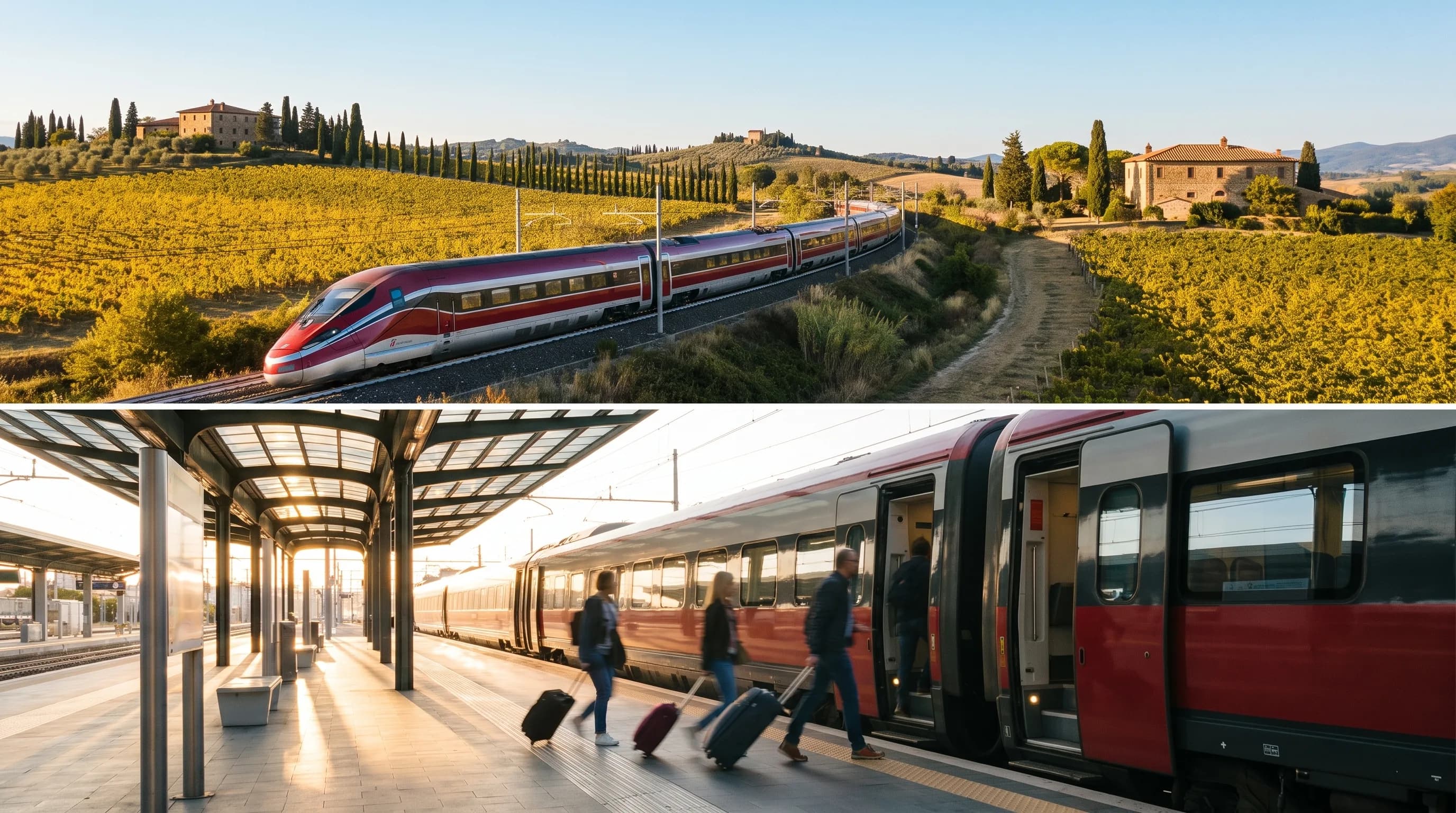
Renting a car in Italy sounds romantic until you are reading a parking sign in a medieval hill town while a scooter waits behind you with the patience of a judge.
For most first or second trips, the smarter move is the train.
Italy's rail network will not take you everywhere, but it will take you to a surprising amount of what people actually want: historic centers, food cities, coastal gateways, and museums within walking distance of the station.
Start in Milan, then move with gravity
Milan is an easy arrival city, and it puts you on the fast rail spine immediately. Spend a day with the Duomo, the design shops, and a proper aperitivo, then ride south to Bologna.
Bologna is the ideal second stop because it rewards eating, walking, and doing very little else. It also keeps your trip from becoming a checklist of only the most famous cities.
Florence and Rome are the obvious middle, because obvious works
The Florence-to-Rome train connection is one of the reasons the no-car version is so good. You can sleep in the center of Florence, see the Renaissance greatest hits, eat late, and still be in Rome the next morning without losing half a day to logistics.
Rome deserves more time than people give it. Three nights is the minimum before it starts to feel less like a museum and more like a city.
Naples is where the trip wakes up
Too many rail itineraries stop at Rome. That is a mistake.
Naples gives you another Italy entirely: louder, warmer, faster, messier, more generous. The train station drops you into a city that can feel overwhelming for the first hour and unforgettable by dinner.
From there, Pompeii is easy. So is the ferry network if you want to continue toward the islands.
The best car-free rule
Choose hotels near transit, but not inside the station zone by default. The sweet spot is usually a 10-to-20-minute walk from the platform, close enough with luggage but deep enough into the city that your first coffee feels like a place, not a transfer.
Italy by train is not a compromise. Done well, it is the cleanest way to spend less time managing a trip and more time actually being in one.