
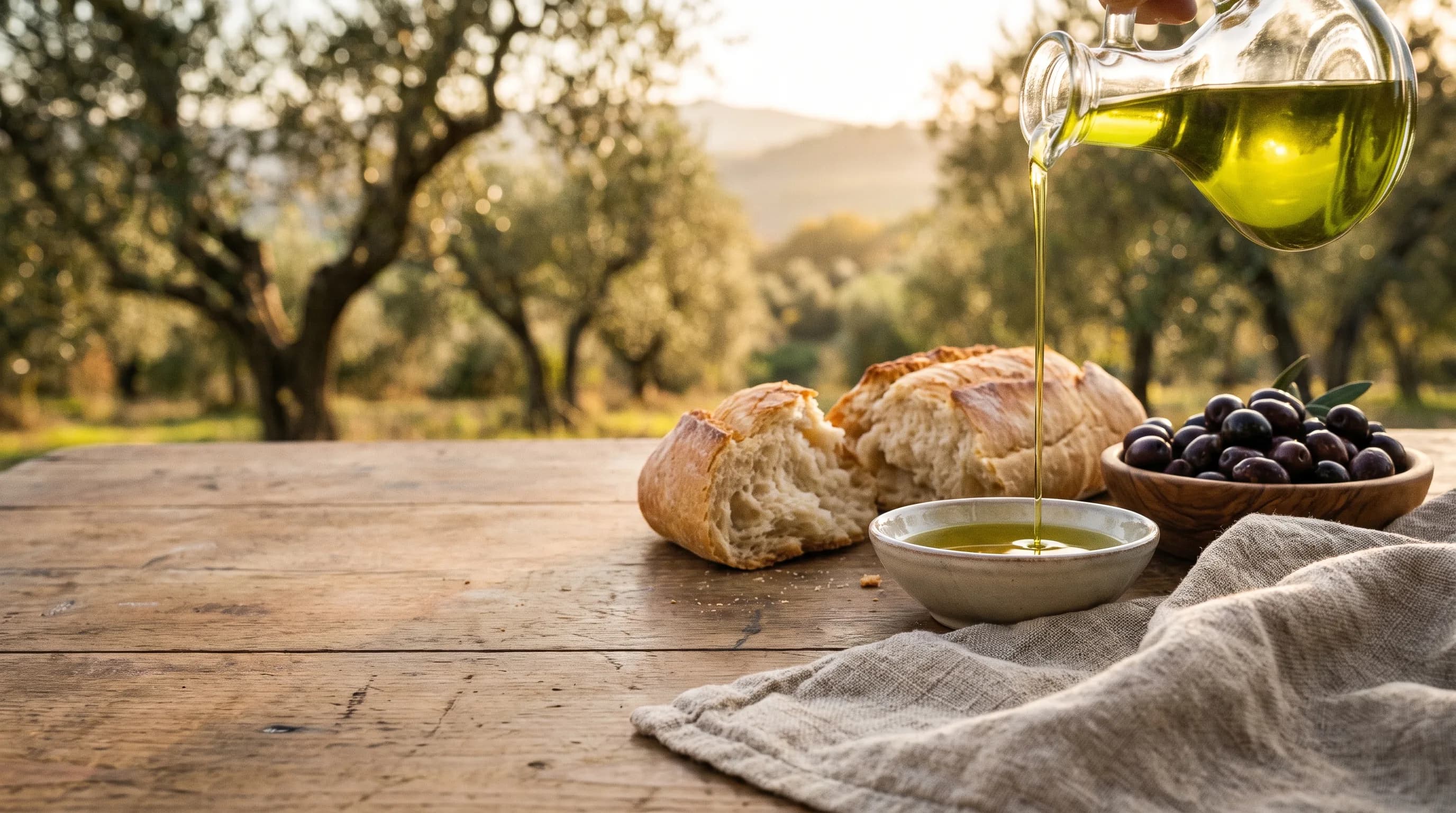
There is a moment in Tuscany when olive oil stops being a pantry item and becomes the center of the room.
It happens around harvest, when crates move from groves to mills, the air turns grassy and sharp, and bread exists mostly as a delivery system.
New oil is not subtle. It can be green, peppery, almost spicy in the throat. If your idea of olive oil is something anonymous from a supermarket shelf, the first taste can feel like learning the ingredient over again.
The mill is the theater
Watching olives become oil is practical work, not a performance, but it has the same pull. People wait. Machines hum. Someone checks color and aroma. Everyone has an opinion.
The fresh oil comes out vivid and alive, and the tasting is immediate.
Fettunta is the whole lesson
The classic harvest snack is brutally simple: grilled bread, rubbed with garlic if you like, flooded with new oil, finished with salt.
That is it. That is also the point. When the oil is this good, complexity would be rude.
The season changes the itinerary
Harvest travel is slower and more rural. It points you toward farm stays, small towns, mills, cooking classes, and lunches that begin with oil and end sometime after you forgot the schedule.
It is not the Tuscany of endless sunflower photos. It is darker, greener, cooler, and more intimate.
Bring home less, but better
Fresh oil is a reminder that souvenirs do not need to be decorative. Sometimes the thing worth packing is the thing you will finish.
Back home, open it. Use it generously. Do not save it until it stops tasting like the trip.