
Umbria does not announce itself as loudly as Tuscany.
That is part of why people who like it become protective.
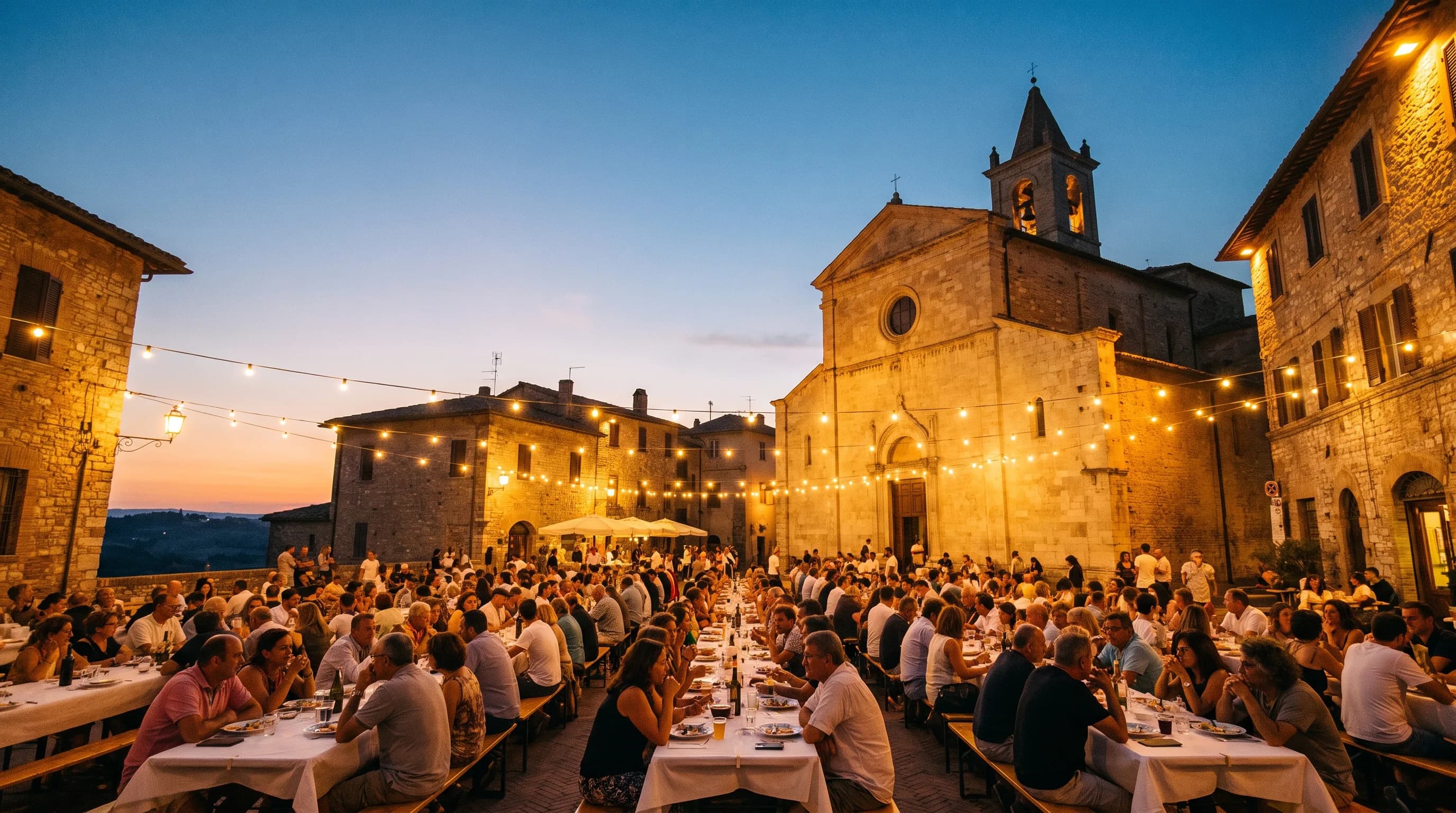
The towns are hilltop and stone-built, the food is earthy, the distances are manageable, and the calendar seems constantly interrupted by festivals that make perfect sense locally and almost none on paper.
A festival can be about almost anything
Truffles. Lentils. Jazz. Medieval archery. A patron saint. Wine. Chocolate. A historical rivalry that everyone appears to understand except you.
The subject matters less than the effect: streets fill, tables appear, older residents become unofficial directors, and the town briefly explains itself through food, music, costume, or ritual.
Do not over-curate it
The best festival experience is often accidental. You see a poster, ask someone at the hotel, follow music through an archway, and suddenly dinner plans have changed.
This is not inefficient travel. This is the reason to travel slowly.
Eat what the town is proud of
If a village has organized an entire weekend around one ingredient, order that ingredient. The dish may be simple. That is usually the point.
You are not there for novelty alone. You are there for repetition, seasonality, and the local confidence of making one thing very well.
Stay close enough to walk home
Umbrian towns are best at night when the day-trippers are gone and the stone holds the day's warmth. If a festival is happening, book inside or near the walls if you can.
You will thank yourself after the second glass of local wine and the third lap around the piazza.